
Cassini Research at Walnut AI's AI Startup Pitch Night
Cassini Research partnered with AWS, Antler, Walnut AI, Llama Ventures, and Fusion Fund to host AI Startup Pitch Night in San Francisco.
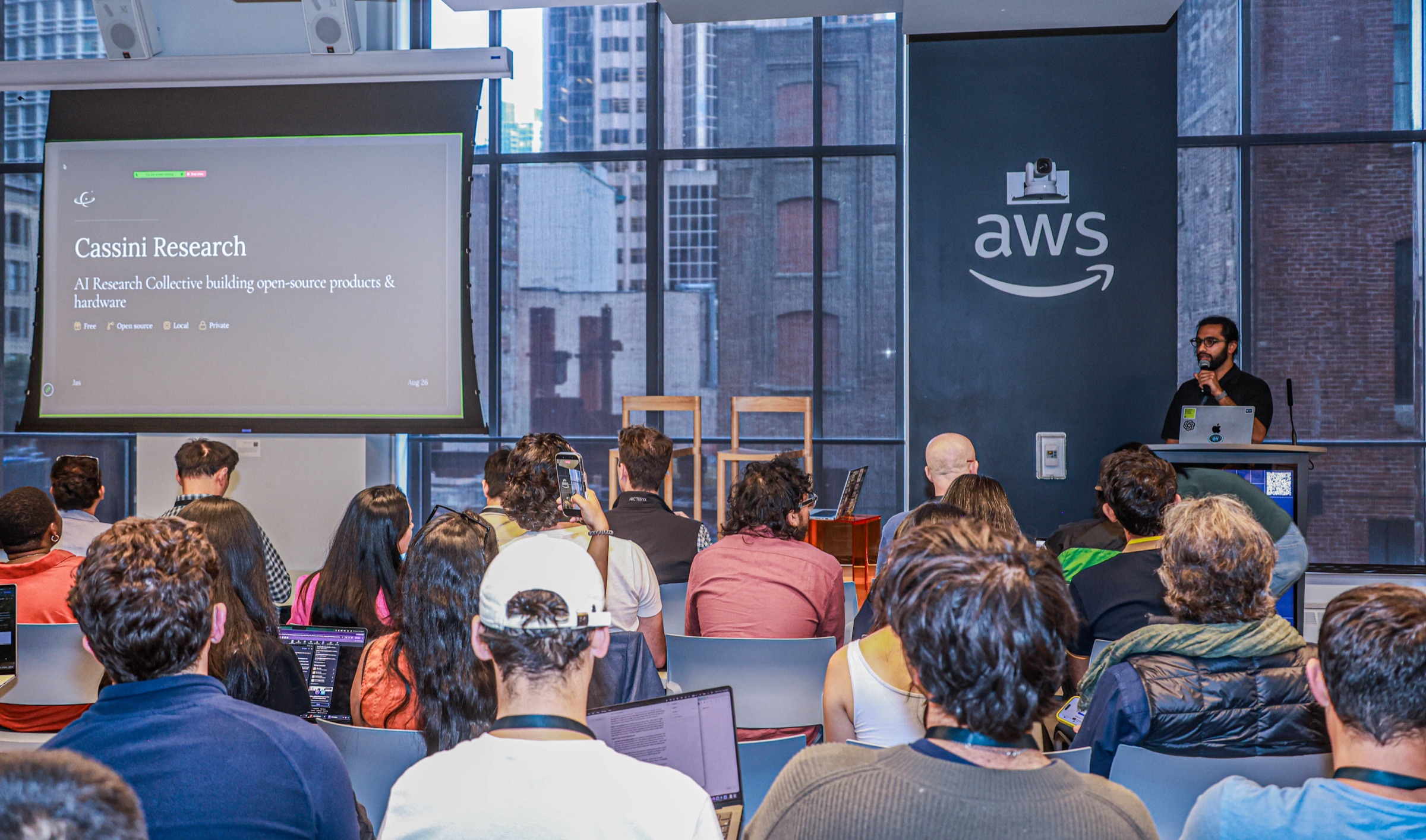
The event drew 388 registrations and 61 applications for 18 pitch slots. On the night, 209 people filled the room: eight founders gave five-minute presentations, and ten more entered the 90-second blind-pitch round.
The teams worked on AI infrastructure for construction, clinical oncology workflows, open-source software security, human–AI evaluation, creative tools, and enterprise systems. Some were developing models or contributing to open-source infrastructure. Others combined existing models, data, and tools around a specific workflow. Across both approaches, the useful question was whether a complete system could perform dependable work, not simply whether a model could produce an answer.
Jas and Ishita represented Cassini Research and met founders, investors, and builders from across the Bay Area. Jas served on the judging panel with Ryan Green of Antler, Gavin Zhu of Llama Ventures, and Lan Wu of Fusion Fund. We discussed Cassini's open-source systems and spent time with founders on their pitches, product choices, and the technical constraints behind what they were building.
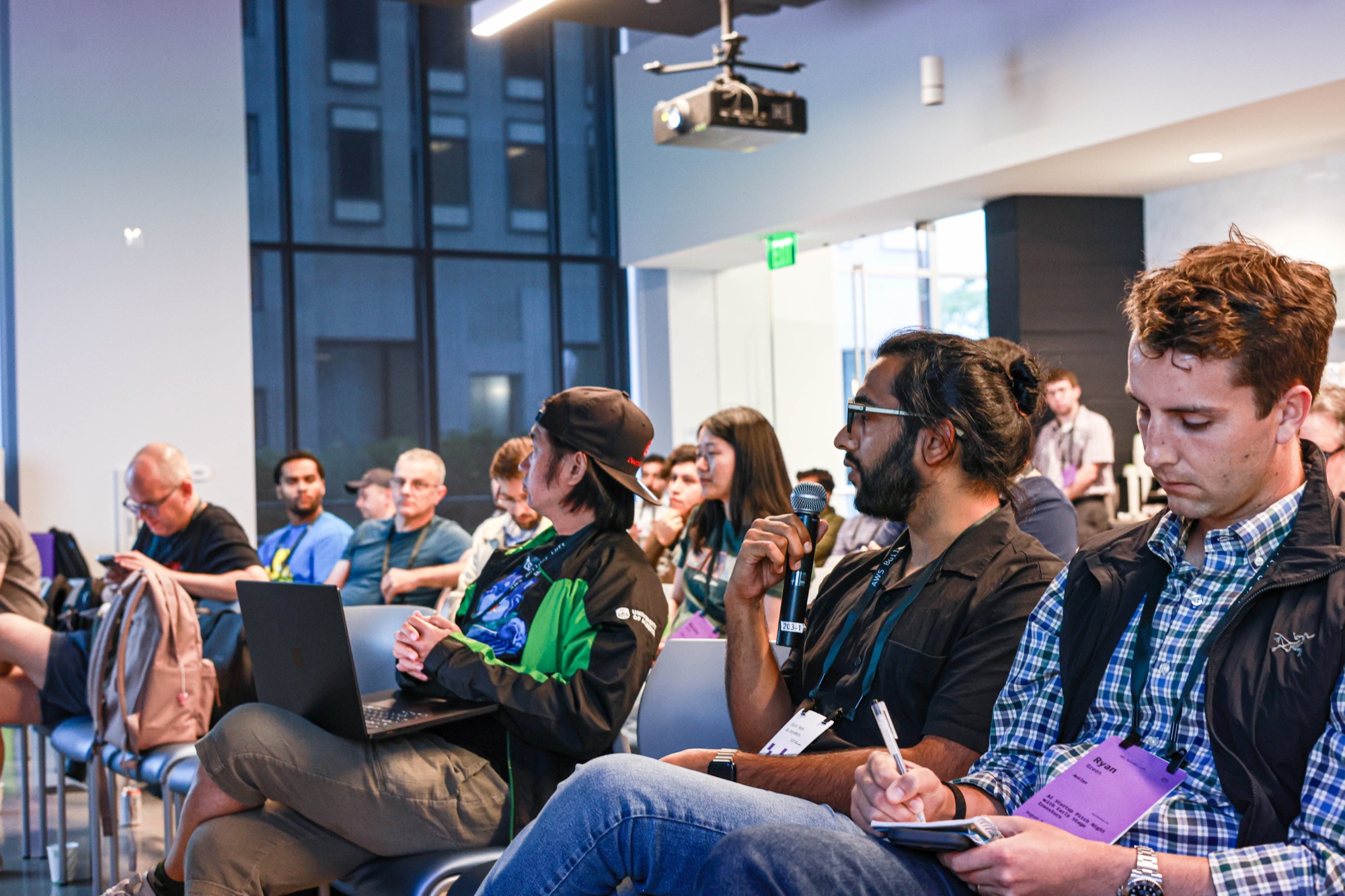
Loops, not just agents
“Agent” now describes so many products that it often hides the important part. We find it more useful to look at the loop around the model. The system observes the current state, gathers context, chooses an action, uses a tool, checks the result, updates its state, and decides what happens next. A single model call produces an output. A loop is designed to carry work toward an outcome.
We saw a couple of teams at the event building this way for enterprise workflows. They were not adding a chat interface or a tool call to an existing product. They were trying to own the sequence end to end. In that kind of system, the model may be the most visible component, but it is not the whole product. The hard parts are the surrounding state, permissions, memory, evaluation, and feedback path.
This is where reliability and trust become concrete engineering problems. A loop can repeat a bad assumption, magnify a small error, or act on a real system before the mistake is obvious. It needs more than a strong model. It needs bounded permissions, useful checkpoints, evaluations tied to the task, clear stopping conditions, and a sensible handoff to a person. Trust comes from being able to inspect what the system did, understand why it took an action, and check whether the result was correct.
The same idea recently appeared at a larger scale with the formation of Discovery Loop. Jeff Dean, Sanjay Ghemawat, Quoc Le, and Oriol Vinyals are leaving Google to build around automated experimental loops for science and engineering. Their domain is different from the enterprise products presented in San Francisco, but the move is familiar: away from isolated inference and toward systems that can propose, execute, observe, and improve.
At Cassini, we are exploring the same systems question from an open research perspective: how can a loop keep useful context, evaluate its work while it is running, and remain legible to the people relying on it? We have early work underway and will publish it when there is something useful to show.
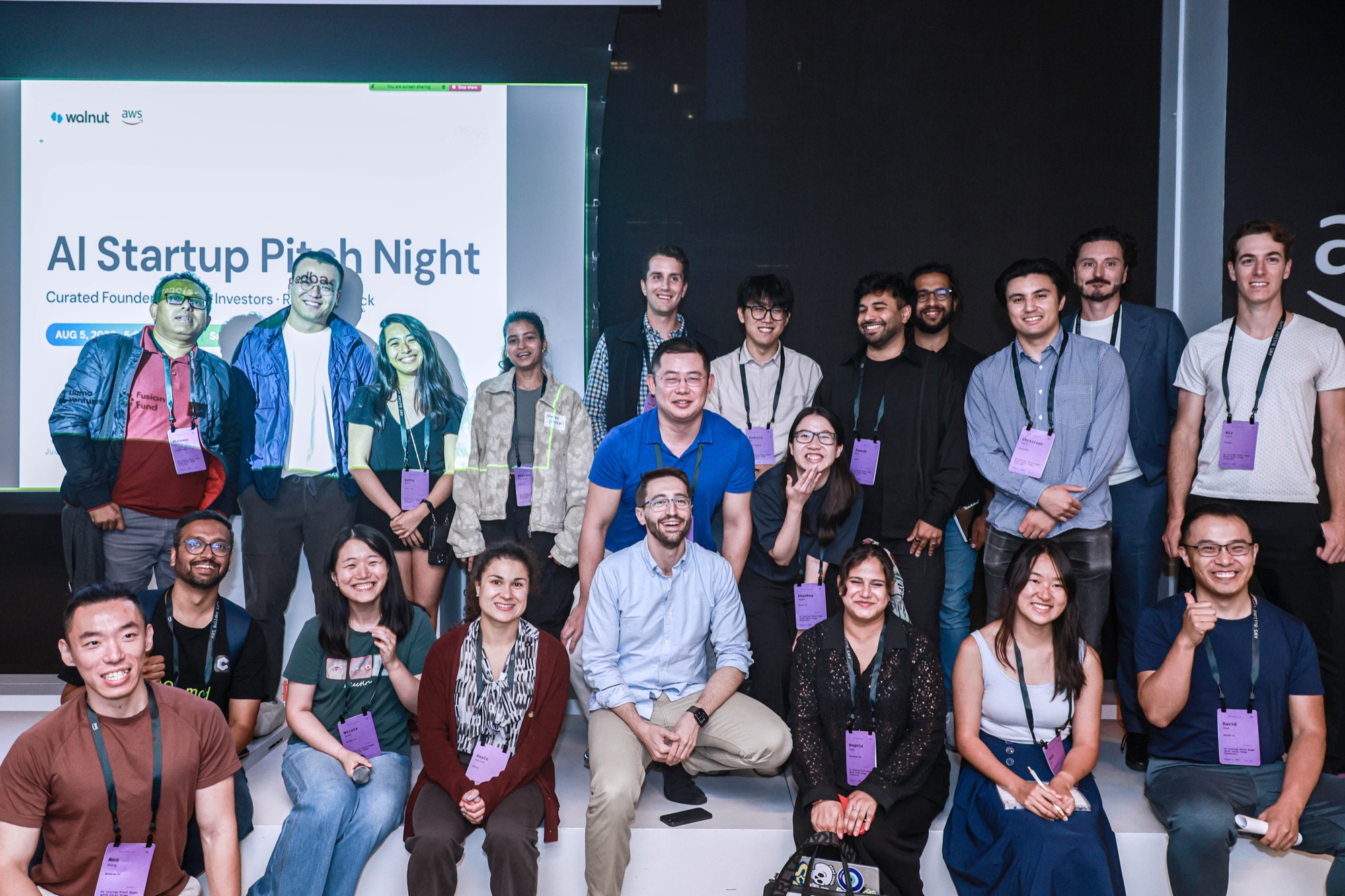
Pitch Night offered a useful snapshot: founders are already building beyond a single model call. Thank you to every team that shared its work, to Ryan, Gavin, and Lan for judging alongside us, and to Walnut AI for organizing the evening.